


.png)
Why Authentic Recovery Stories Will Change the Way Your Church Sees Redemption

Let’s be honest for a second. We’ve all done it. We pull into the church parking lot, maybe we’ve just had a screaming match in the car, or maybe our hearts are heavy with a secret struggle we think would "disqualify" us from the pew. We check the rearview mirror, wipe away the stray tear, and put on the "Sunday Mask."
"How are you, friend?" someone asks in the lobby.
"I'm blessed! Just so thankful," we reply.
But inside? Inside, we are drowning. We are white-knuckling our way through the service, hoping no one sees the cracks in the porcelain.
Here is the truth: when we keep our struggles in the dark, we rob the Church of seeing the true power of God. When we hide the "messy middle" of our lives, we make redemption look like a finished trophy on a shelf rather than a living, breathing miracle.
That is why recovery stories are not just "nice to have" in a ministry setting, they are ESSENTIAL. They are the bridge between a theoretical God and a God who actually shows up in the dirt.
The Problem with "Polished" Redemption
For a long time, the narrative in many faith circles has been: "I was bad, then I found Jesus, and now everything is perfect."
Does that sound like your life? Because it certainly doesn't sound like mine.
My journey, the one I share in Courageous, wasn't a straight line. It was a jagged, painful, beautiful, and often terrifying climb. When we only share the "after" photo without showing the "before" or the "during," we accidentally tell people who are still struggling that they don't belong.
We make GRACE look like something you earn once you've cleaned yourself up. But that isn't the Gospel. The Gospel is that while we were still "in it", the addiction, the trauma, the shame, Christ died for us.
Why Authenticity is a Game-Changer
When someone stands up in a church setting and shares their authentic recovery story, the atmosphere changes. You can almost hear the collective exhale in the room. Why? Because authenticity gives everyone else PERMISSION to be real.
It Breaks Down Isolation: Shame thrives in secrecy. When I share my lived experience with ministry leaders and congregations, I see the light bulbs go off. People realize, "Wait, if she struggled with that and God is using her, maybe there’s hope for me too."
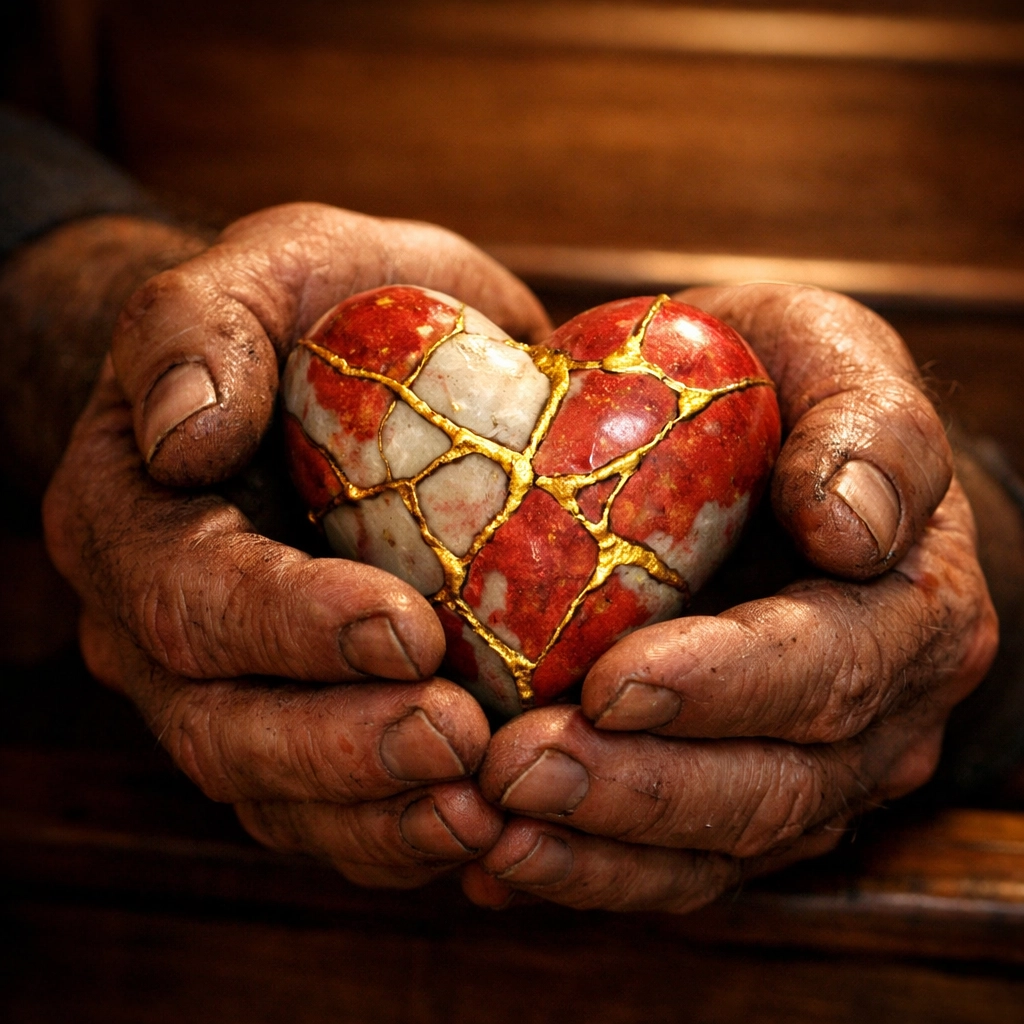
It Makes Grace Tangible: We can talk about the "theology of grace" all day long, but when you see a life that was once shattered being rebuilt piece by piece, grace becomes a REALITY you can touch.
It Redefines Success: In a world obsessed with perfection, recovery stories remind us that success in the Kingdom is about SURRENDER and FAITHFULNESS, not having a "perfect" track record.
The "Messy" Power of Lived Experience
I’ve spent years in ministry, and I’ve learned that there is a massive difference between someone who has studied recovery and someone who has lived it. My lived experience isn't a scar I have to hide; it is my greatest credential. It allows me to look into the eyes of a woman who feels like she has burned every bridge and say, "I have been where you are. There is a way back. And the way back is through YES, saying yes to the hard work of healing."
Does it feel risky to be that open? ABSOLUTELY. It’s raw. It’s vulnerable. It feels a bit like standing naked in the town square sometimes. But the fruit of that vulnerability is always TRANSFORMATION.

Shifting the Church Culture: From "Fix It" to "Walk With"
If we want our churches to be true hospitals for the broken, we have to stop trying to "fix" people with three-point sermons and start walking with them through the long, slow process of restoration.
Authentic recovery stories show us that redemption isn’t a microwave process; it’s a slow-cooker journey. It involves community, accountability, and a whole lot of patience. This is why holistic recovery programs are so vital. They recognize that we aren't just spirits; we are bodies, minds, and souls that all need healing at the same time.
Think about it this way: If you saw someone drowning, you wouldn't stand on the shore and shout instructions on how to do the breaststroke. You’d jump in. Authentic stories are the "jumping in." They say, "The water is cold, and the current is strong, but I’ve got you, and God’s got us both."
Story + Lesson + Action
Every time we share our journey, we should follow a simple framework to ensure our pain serves a purpose for others.
The Story: Be honest about the struggle. Don't gloss over the hard parts. Mention the "white-knuckling" nights. The Lesson: What did you learn about God in the darkness? Maybe you learned that His grace is sufficient even when your strength is zero. The Action: What is the next step? Recovery isn't just about feeling better; it's about doing better.
Wait, does this actually work? I get it. You might be skeptical. You might think, "If I tell my church the truth, they’ll judge me."
I won't lie to you: some might. But for every one person who judges, there are ten others who are waiting for a leader to be brave enough to tell the truth so they can finally stop hiding.

How to Foster a Culture of Redemption in Your Ministry
If you are a leader or someone who wants to see your church change, here is the "practical stuff":
Host Guest Speakers with Real Stories: Bring in voices like mine to share what it really looks like to move from addiction to ministry. You can find more about my booking services here.
Create Safe Spaces: Whether it’s a formal recovery group or just a small group that values "radical honesty," create environments where the mask can come off.
Celebrate Progress, Not Just Completion: We celebrate the one-year sobriety chip, but do we celebrate the person who had the courage to come back after a relapse? That is where the REAL redemption happens.
Your Past is Not Your Prison
If you are reading this and you feel like your past is a weight you can never drop, hear me: YOUR PAST IS YOUR PURPOSE.
The very things the enemy tried to use to destroy you are the tools God wants to use to build His Kingdom. Your recovery story is a weapon. It is a light. It is a map for someone else who is currently lost in the woods.
Everything changes when we stop being ashamed of our scars and start seeing them as proof that the Healer is real.

The Next Step
Are you ready to take the mask off? Maybe your "next step" is finally telling one person the truth about your struggle. Or maybe it’s bringing a focus on authentic recovery to your church or women’s ministry.
Whatever it is, know this: You are not alone. The road to redemption is crowded with people who are "redeemed but still recovering," and there is a seat at the table for you.
If you’re looking for more resources on how to navigate this journey or want to bring this message of FIERCE HOPE to your community, check out my store or reach out.
Let's stop pretending and start being the Church God called us to be: a place where the broken are welcomed, the addicted are supported, and recovery stories are the loudest songs we sing.
YES and Amen!
Comments